Insight
The New Gamblers: How Youth Is Reshaping iGaming
According to TransUnion's 2025 Gaming Report, the current surge in gambling activity is being driven by younger cohorts, Millennials and Gen Z.

How Technology Reshaped Gambling
What began as an experiment in the late 1990s — basic software, pixelated games, and dial-up connections — has matured into one of the most agile sectors in digital entertainment. While the initial user experience was underwhelming, it was sufficient to spark a commercial revolution.
The first genuine inflection point came with poker. Between 2003 and 2006, platforms such as PokerStars and Full Tilt capitalised on a surge in televised tournaments transforming online card tables into cultural phenomena. For the first time, virtual play achieved mainstream legitimacy, and players became celebrities, bridging the gap between screen and stadium.
Crucially, the industry’s growth hinged on trust. The mid‑2000s saw the emergence of payment intermediaries, such as PayPal and Skrill as essential enablers. By offering robust fraud protection and seamless transactions, they converted sceptical newcomers into loyal customers, a prerequisite for any sustained expansion.
Then came the smartphone. Apple’s iPhone, launched in 2007, catalysed a shift from stationary to nomadic gaming. Although early apps were basic, they foreshadowed a mobile‑first reality that would overturn desktop dominance within a decade.
By 2015, global traffic statistics confirmed that handheld devices had overtaken computers, a tipping point that was accelerated by the obsolescence of Flash due to HTML5, which made browser‑based play seamless.
The 2010s also saw the maturation of regulation. Affiliate marketing, driven by review sites and social influencers, became a powerful acquisition channel, funnelling millions of players to operators.
Today, with 5G subscriptions approaching 4 billion worldwide (Ericsson, 2025), iGaming operates at near‑instantaneous speeds, supporting live dealer streams and immersive graphics that would have been unthinkable two decades ago.
The most profound shift may be demographic. Generation Z, who have never known a world without constant connectivity, are now joining millennials in reshaping product design, payment preferences, and engagement patterns. They may soon become one of the biggest segments of the iGaming industry. The niche’s evolution is no longer just technical, it is also cultural, generational and mobile.
A Quick Look at Regional Demographics
- Asia: young demographics and rising wealth.
- North America: state-level legalisation, millennial uptake.
- Europe: mature, regulated, demographically balanced.
- Eastern Europe: double‑digit growth in Poland, Romania, the Baltics.
- Latin America: smartphone‑driven boom in Brazil and Mexico.
- Africa: early stage, mobile‑first, Kenya and Nigeria lead.
Generational Dynamics in iGaming
The chart below shows that Millennials are currently the dominant demographic, but the generational tide is turning. The mobile-first dominance of Gen Z is already transforming competitive dynamics across the board.
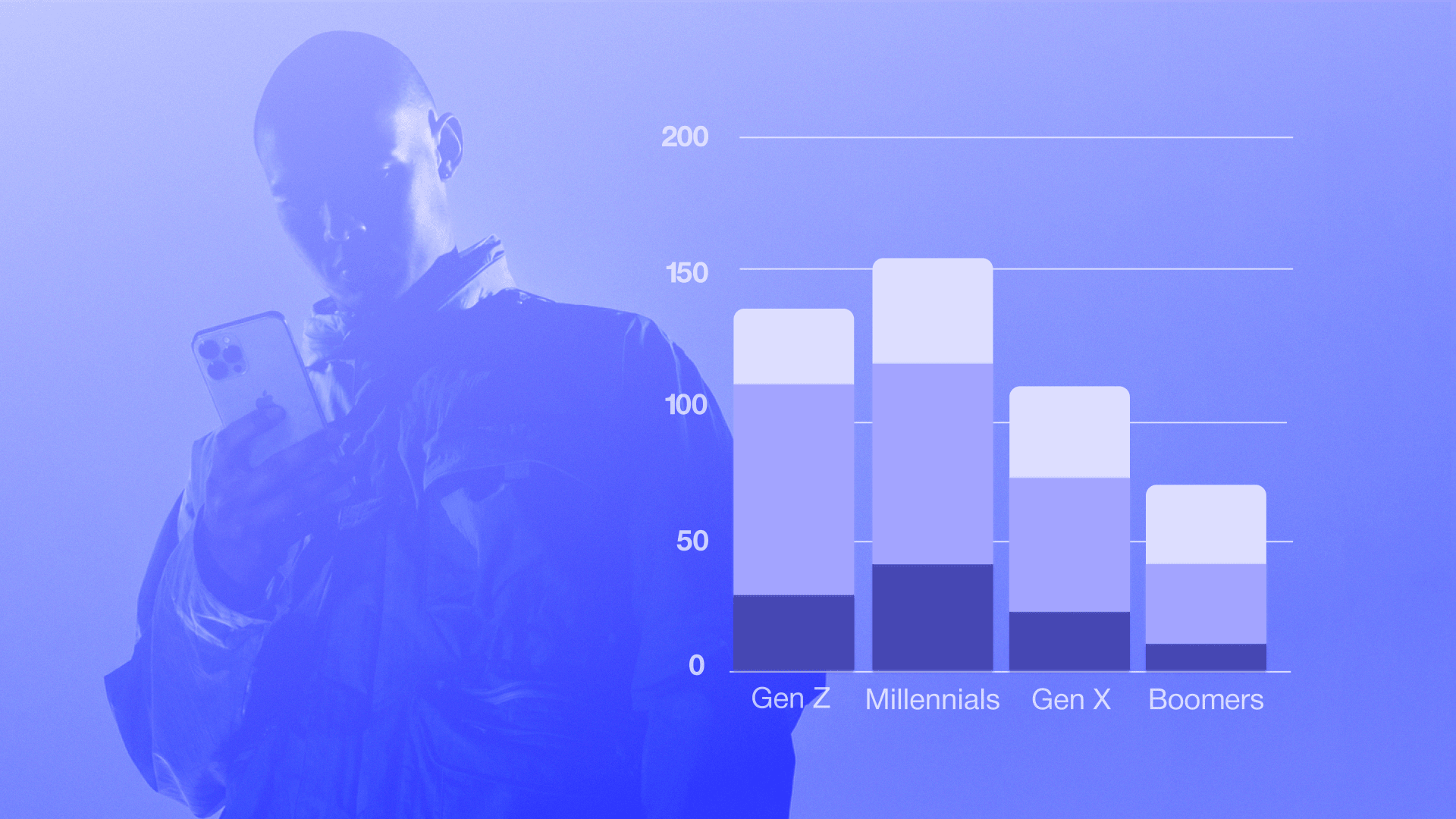
According to GlobalWebIndex 2025
Let us explore the generational dynamics of iGaming. Who is driving today’s wagering volumes? Who remains drawn to physical venues? And which cohort is quietly building the disruptive force that will redefine the sector over the next five years?
Breakdown Generation
The historical dominance of men in sports betting and poker is well documented. However, this generation generally remains loyal to traditional offline establishments.
Nevertheless, a notable divergence emerges among female players: they increasingly favour online casinos, particularly those optimised for mobile environments. Slots and low-stakes casual games are particularly popular with women, making them a significant driving force in this area of the industry.
Currently, this group is the smallest in size and consequently represents the least engaged audience for operators.
Boomers (Gen X)
Though still visible across Europe and North America, the older cohort is gradually disappearing. These users are creatures of habit, preferring desktop to mobile and remaining loyal to traditional slots and table games. They are also indifferent to gamification. Above all, they value a dependable platform and human-backed service — values that conflict with the industry's innovation-driven direction.
Millennials
Although Millennials currently account for the largest share of iGaming expenditure, their engagement is far from passive. At the heart of their participation lies a demand for bespoke experiences. To capture and retain this demographic, platforms must move beyond generic offers and provide highly tailored experiences, including personalised promotions, game suggestions aligned with individual play patterns and targeted marketing. This level of customisation is no longer a luxury; it is a cornerstone of sustainable loyalty among Millennials.
As well as personalisation, this generation values security, seamless integration, and mobile-first accessibility. Multi-device fluidity is the norm because sessions often begin on a smartphone and continue on a desktop, and vice versa.
However, brand loyalty is conditional: consistent bonuses, transparent terms and rapid withdrawals are non-negotiable. Their play sessions tend to be longer, particularly at weekends, as iGaming effortlessly blends into their broader lifestyle habits.
The broader surge in betting is increasingly fuelled by younger legal-age cohorts. According to TransUnion's survey, 42% of Millennials reported betting activity, up from 33% in 2024. Among Generation Z, the figure increased from 2% to 34% — a dramatic rise, with most of that growth concentrated in online sportsbooks.
These figures highlight a generational shift that is behavioural as well as statistical, requiring a strategic rethink of engagement across the board.
Gen Z (Zoomers)
Born into a connected world, Gen Z demands authenticity, immediacy and a sense of community from every digital interaction, and iGaming is no exception. Live dealer offerings with integrated chat functions mirror the participatory experiences that this generation has come to expect on social platforms, effectively bridging the gap between solitary play and shared entertainment.
According to Evoplay, two in five Gen Z individuals now engage in online gambling. This group spends an average of four to five hours a day on their smartphones, so a mobile-optimised experience is not just preferable, it's essential.
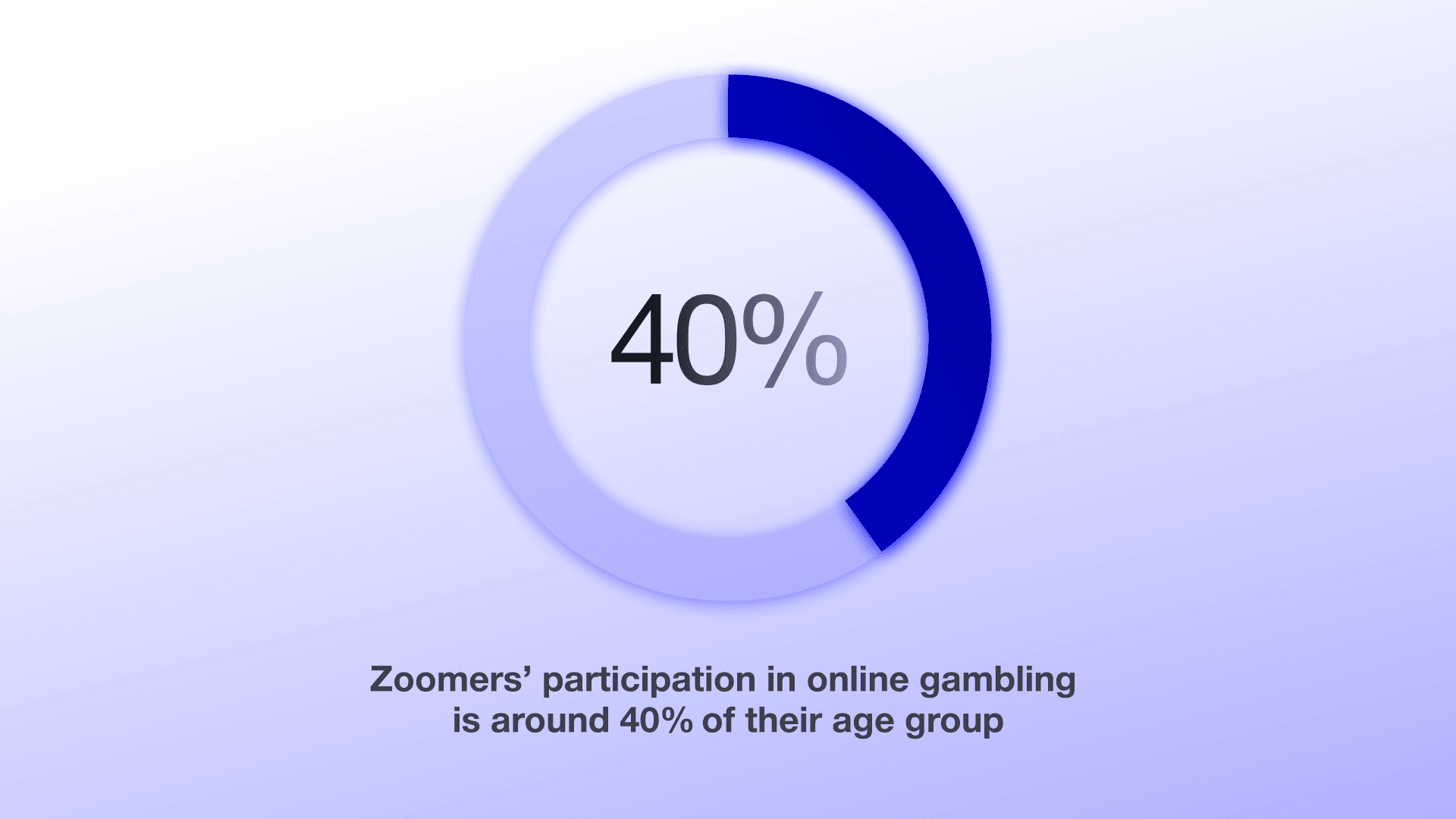
Source: Evoplay
They consume entertainment on the go, so casinos that fail to provide fully optimised mobile interfaces risk becoming irrelevant. Unsurprisingly, this audience responds well to gamification. It is no longer just an optional embellishment, but a strategic necessity.
For this generation, mobile gaming is not a passing fad; it is the norm. Research reveals that 80% of Gen Z sports bettors favour mobile apps for their accessibility and real-time responsiveness.
While football remains the most popular betting sport, eSports is rapidly gaining ground — a natural progression for a tech-savvy demographic. Their betting patterns differ markedly, with smaller stakes per session but greater frequency. Retention hinges on gamified loyalty schemes, tiered rewards and embedded social features.
This blend of traits makes Gen Z the most lucrative and numerous segments for operators. Although broader cultural discourse suggests a 'simple life' trend — a retreat from digital overexposure — the numbers tell a different story. Engagement continues to increase. The real challenge lies not in resisting the digital tide, but in identifying the precise approach that aligns with the unique cultural and behavioural characteristics of each region.
How Operators Are Steering Through Generational Change
The industry has responded swiftly, strategically and multifariously to shifting demographics.
Mobile optimisation has evolved from a competitive advantage to a fundamental requirement. Now, platforms prioritise smartphone-first interfaces with streamlined navigation, gesture-based controls and responsive layouts.
Personalisation, driven by machine learning, has become the new loyalty engine. Operators use behavioural data to offer bespoke bonuses, game recommendations, and timely alerts, turning casual visitors into regular players.
Cultural calibration is paramount. Trust is earned by integrating locally preferred payment gateways, regionally relevant game aesthetics and full language localisation. Beyond these fundamentals, forward-thinking firms are embracing cryptocurrency rails, forming partnerships with eSports titles and embedding responsible-play features powered by real-time AI monitoring — tools that satisfy both regulators and ethical imperatives.
Esports betting, in particular, has emerged as a natural gateway for Generation Z, combining competitive entertainment with wagering in a format that they are already familiar with. Meanwhile, culturally anchored campaigns demonstrate that effective engagement is as much about local rhythm as technology.
The overarching message is that agility, not scale, now defines market leadership.
Wrapping Up
The iGaming industry has evolved from dial-up experiments to 5G-powered immersion. However, the real revolution is generational, not technological. While Millennials currently drive high volumes, Gen Z, who are both mobile-native and hungry for gamification, are rewriting the rules. One truth holds across six regions: the future belongs to those who blend cultural insight with digital agility.