Business
The Hidden Crisis of Fast-Growing Companies: Why Growth Creates Chaos
Rapid growth does not always create stronger businesses. Explore why fast-growing companies struggle with operational complexity, legacy systems and the hidden risks of scaling too quickly.
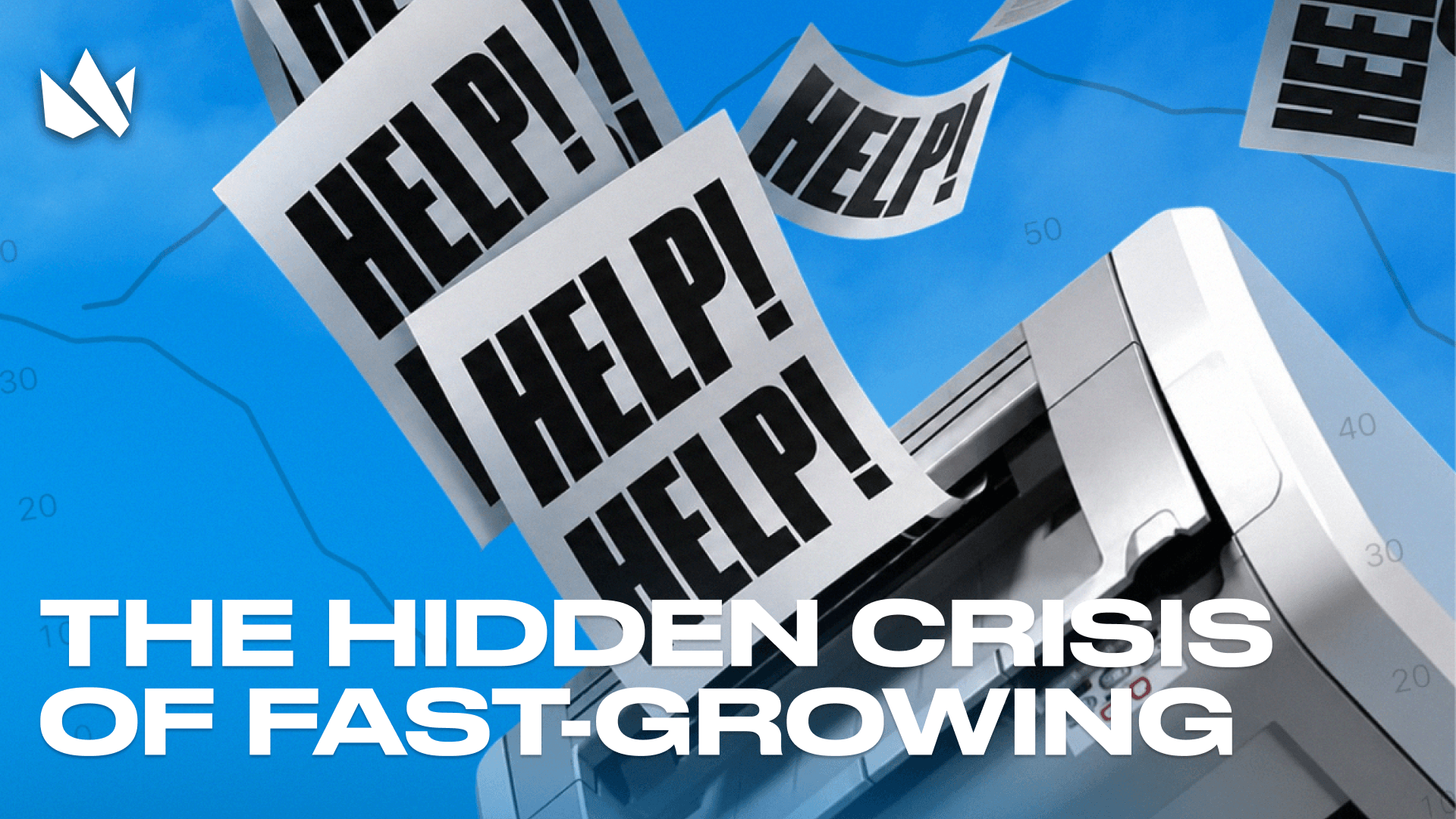
The biggest challenge for fast-growing companies often begins after success. As teams scale, speed and improvisation can turn into operational bottlenecks, slowing decisions and creating hidden structural risks.
Key Takeaways
- The biggest risk for fast-growing companies often appears after success, not during crisis.
- Startup speed and improvisation can drive early growth, but chaos rarely scales into sustainable systems.
- Rapid growth frequently exposes operational bottlenecks, slow decision-making and structural weaknesses.
- Founder-driven processes that create speed at early stages can become limitations during scaling.
- Legacy systems often create invisible friction by reducing flexibility and slowing adaptation.
- Marketing does not solve structural problems — growth often reveals weaknesses faster than it creates opportunities.
- Long-term success increasingly depends on discipline, structure and the ability to adapt without losing control.
There is a paradox in modern business that managers rarely discuss. The most dangerous moment for a company is often not a crisis or even a product failure. Problems tend to arise after the first period of significant growth, once the business has learned how to generate revenue and become confident. At this point, it seems as though the system will work by itself and management becomes less important. This is when companies lose control.
Initially, growth depends on the team's speed, energy and ability to make quick decisions. Such chaos can even seem advantageous: quick approvals, minimal bureaucracy and aggressive marketing. However, what helps a start-up rarely helps scaling. This is especially noticeable in iGaming. A market that has recently been associated only with excitement and hyper-growth was the first to talk about discipline as the key to survival.
In an interview with SiGMA News, Alexander Feshchenko, CEO of GR8 Tech, said:
Long-term success is not an accident. We need discipline, preparation, a clear plan, and the ability to adapt without compromising our standards.
Why Growth Can Become a Business Risk
Over the last ten years, the market has become obsessed with speed. Today, businesses are more often faced with an overload of the system than with a lack of growth. Many companies suddenly slow down after a period of rapid growth.
Research around scale-up companies suggests that nearly 78% of businesses with proven product-market fit struggle during scaling phases. The problem is often not demand itself, but operational bottlenecks, unclear ownership and decision-making complexity Processes cannot keep up with changes, decisions take longer to make and internal coordination becomes more challenging than navigating the market itself.
Why Companies Lose Control After Success
At first, chaos may seem flexible. Teams respond quickly, the founder is actively involved in decision-making and many processes are carried out manually. While the business is small, this model creates the illusion of speed and control. However, this becomes problematic when scaling up.
Even the iGaming industry, long associated with aggressive growth and marketing, has come to a similar conclusion. In 2026, therefore, GR8 Tech launched the Champions Club project and invited José Mourinho. While it appeared to be a high-profile image collaboration, the company explains it differently.
According to Alexander Feshchenko, Mourinho symbolises a particular managerial approach for the company. A coach who has achieved success in different clubs and conditions, Mourinho has become the epitome of systematic thinking, preparation, and achieving results under pressure.
Feshchenko emphasises that long-term success is not accidental; it is based on discipline, structure, and the ability to adapt without compromising standards. Mourinho's philosophy aligns with GR8 Tech's values, as the company strives for controlled growth rather than chaotic expansion.
This led Feshchenko to another important point:
Even the best talent shows poor results without the right system around it.
At some point, a business will start to suffer due to a lack of clear structure.
Why Chaos Stops Working at Scale
Research on enterprise infrastructure increasingly shows that outdated systems become barriers to innovation and scalability. Companies often discover that legacy environments slow execution long before they become visibly broken. In an interview with Alexander Feshchenko, the CEO of GR8 Tech, one of the main topics discussed was the issue of legacy technologies. He noted that switching from legacy systems is one of the most challenging decisions businesses face. Companies have been postponing this step for years due to the associated costs, risks and restructuring of processes.
However, the problem is that these outdated systems are gradually and almost imperceptibly hindering the company's development. They hinder the launch of new products, make scaling more challenging, cause internal interference and reduce business flexibility.
GR8 Tech's ideas on this issue coincide with the conclusions of Uplatform. In their research, the Uplatform team describes the consequences of technological and operational inertia faced by growing companies. According to Dina, Uplatform's Head of Projects, even experienced operators do not always have time to adapt to a rapidly changing market. One day it may be payments, the next day marketing effectiveness, and the day after that, new requirements may necessitate changes to the product itself.
Against this backdrop of instability, outdated systems are becoming obstacles to growth rather than reliable tools.
The Founder Dependency Trap
This difference becomes especially obvious when entering new markets. Structured companies work on localisation, regulatory compliance, payment adaptation, customer support and marketing simultaneously. In contrast, chaotic organisations often begin operations first and then attempt to address operational shortcomings, typically by reducing costs and profitability.
Katerina, Head of Uplatform's Key Customer Management Department, explains that organised companies rely on documented processes, clear priorities and measurable goals. Conversely, chaotic teams tend to spend most of their time solving current problems rather than building sustainable systems.
The Myth of Marketing-Driven Growth
Many people mistakenly believe that marketing can ensure a company's long-term growth. However, attracting customers actually helps to identify weaknesses in the operating system more quickly. While the increase in traffic can be rapid, without reliable adaptation, analytics, fraud protection, payment stability and customer retention systems, this growth can quickly turn into an outflow.
Companies often start restructuring when their current resources are insufficient. The problem rarely lies in a lack of demand. More often than not, a business is faced with a situation where the existing structure cannot cope with the increased workload.
Success Can Create Complacency
Complacency is one of the main threats following rapid growth. When a company achieves high revenues or becomes a market leader, management usually focuses on maintaining momentum rather than considering whether the current system will be able to withstand future pressure.
Alexander Feshchenko notes that many companies confuse short-term success with long-term development. He emphasises the importance of maintaining discipline even after significant achievements and of constantly assessing what new levels of responsibility and quality are needed.
Many growing companies avoid replacing outdated infrastructure. Old systems can run for years, creating the illusion of stability. However, they actually slow down development, reduce flexibility and make it difficult to adapt to new markets.
Feshchenko says that platform migration is one of the most important but difficult scaling decisions. Companies often delay these changes because migration is expensive and risky, and requires an overhaul of internal processes. However, remaining tied to old systems eventually poses an even greater threat to growth.
Today's economic growth depends on the ability to adapt. Modern technology partners offer more than just server provision. Operators are becoming increasingly dependent on platforms that help them to localise products faster, adapt to changes in legislation, personalise offers, and scale them up without losing efficiency.