Insight
Sensations and Heartbreaks: The Emotional Rollercoaster of the 2026 World Cup
The 2026 World Cup has now finished. Let's rewind and break down exactly how it played out, and what it meant for those riding the wave.
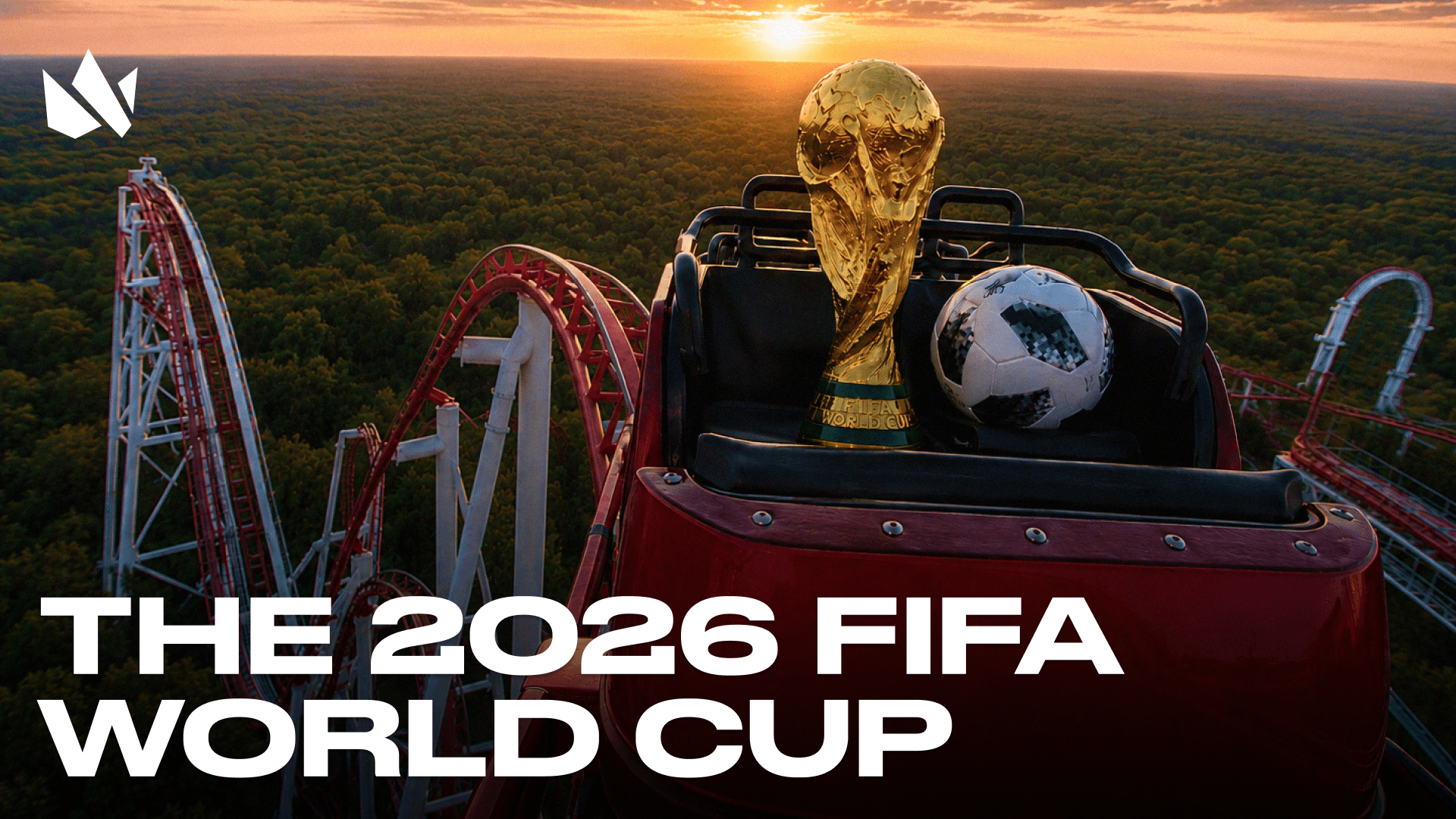
The 2026 World Cup has drawn its final curtain. Nearly 5 billion people were glued to every pass, every tackle and every twist of fate. From surging emotions and heart-stopping upsets to shattered records, scandals that shook the sport and the inevitable colossal feeling of betting, this championship delivered everything that makes football a global phenomenon.
So let's rewind and break down exactly how it played out, and what it meant for those riding the wave.
The Greatest Show on Earth: How 2026 World Cup Rewrote History
The 2026 World Cup has now finished. The tournament attracted over 5 billion spectators worldwide, whether in stadiums or in front of screens. Spanning nearly six weeks, the tournament featured 104 matches staged across three nations: the United States, Canada, and Mexico.
Saying Goodbye To Icons
This North American tournament may go down to history as the last appearance of three legendary players. Two of them need no introduction: 41-year-old Cristiano Ronaldo and 39-year-old Lionel Messi. Neither has officially retired yet, but they will be well past their footballing prime by 2030. The third is 40-year-old Luka Modrić, the icon who claimed the Ballon d’Or in the 2010s and whose quiet brilliance defined an era.
Hydration Breaks
Throughout the tournament, fans everywhere learned a new phrase: hydration break. FIFA introduced these cooling pauses before the World Cup, scheduling one three-minute break in the middle of each half.
The organisers cited high temperatures and humidity as the rationale for this. However, the breaks were also used in domed stadiums and regions where the weather hardly warranted them.
What seemed a harmless initiative quickly became one of the most talked-about features of the tournament. For one thing, they disrupted the familiar rhythm between coaches and players, turning water breaks into tactical timeouts that reshaped matches.
Analytics companies rushed to study the impact, though the effects were plain enough. For another, many suspected FIFA was exploiting hydration pauses for commercial gain by enabling broadcasters to sell additional advertising slots.
Moreover, every pause during matches was seamlessly filled with commercial breaks. According to BBC Sport, fans across the globe endured a staggering 7 hours, 30 minutes and 40 seconds of advertising over the course of the entire tournament.
Financially speaking, the standard cost of a 30-second slot on Fox Sports during the World Cup typically ranges from $200,000 to $300,000. Hovewer, when the US national team takes to the pitch or the competition advances to its climactic knockout stages, this premium rate soars dramatically, peaking at an astonishing $750,000.
Several major European nations, including Britain, France, Spain, and Germany declined to be involved.
Presidential Pardon
The tournament's loudest heartbreak centered on US striker Folarin Balogun. The hosts' star striker was sent off in round of 16, but was swiftly pardoned and given a conditional suspension.
This was an unprecedented move, as a red card in modern football always means at least a one-match ban. However, President Donald Trump intervened on Balogun's behalf, and his call to FIFA president Gianni Infantino was enough to secure the striker’s release. The organisation's disciplinary committee found a loophole in rarely used Article 27 of the Disciplinary Code, which allows the body to suspend the execution of sanctions.
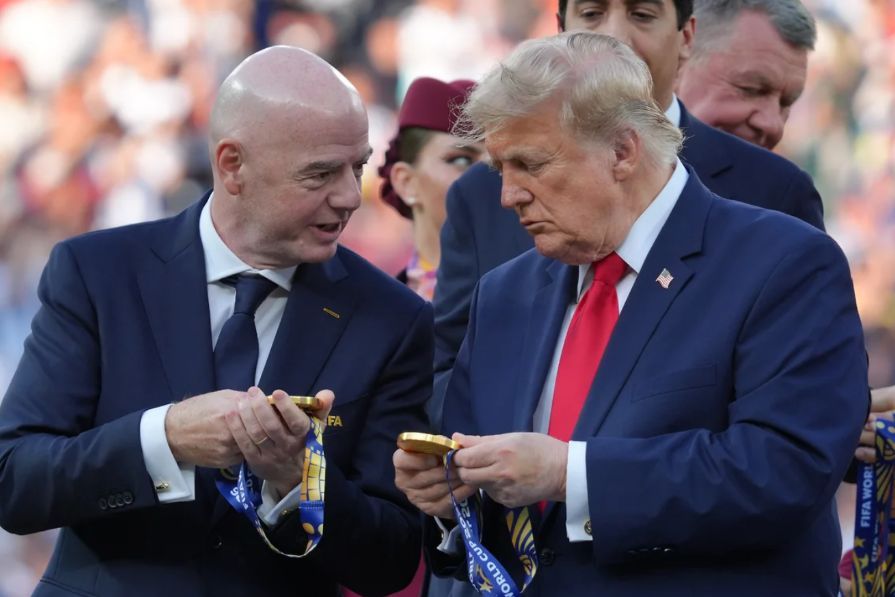
Gianni Infantino and Donald Trump. Source: Jacquelyn Martin / AP
Gianni Infantino, who had previously described Donald Trump as a very close friend and accompanied the US president on numerous occasions, immediately found himself under fire. A rift erupted between FIFA and UEFA, with UEFA accused of crossing red lines and undermining trust in the competition.
As the Council of Europe put it, political influence had finally made its way onto the pitch. The player, however, continued to play.
Mbappe, Messi, Yamal: The Brightest Stars
The biggest record was the sheer volume. From 1998 to 2022, each World Cup featured 64 matches, in 2026, teams played 104. This also fuelled a new scoring record of 308 goals in total. Participation also reached an all-time high: for the first time, 48 nations competed for the trophy, increasing the number of players who took to the pitch.
Lionel Messi became the oldest player to score a World Cup hat-trick. This was his first ever in the tournament, setting a new record for goal involvements with 33 points (21 goals, 12 assists). He also became the first player to score in eight consecutive World Cup matches.
Lionel Messi, Luka Modrić, and José Mourinho took part in an ad campaign for Kalshi, a prediction exchange platform. Luka Modrić became the brand ambassador for the campaign.
Meanwhile, Messi and Spain's Lamine Yamal made history in the final: their age gap of 20 years was the largest ever between players in a World Cup decider.
Interestingly, Messi and Yamal had actually met before, in 2007, during a charity photoshoot. At the time, the Argentinian was 20, and the Spaniard had just turned one. No one could have foreseen back then the legend Messi would become or the player Yamal would one day grow into.

Yamal and Messi in 2007. Source: Yahoo!Sports
And another headline name: Kylian Mbappé finished as the World Cup's top scorer with ten goals. Close behind was Lionel Messi once again, with eight, while Erling Haaland and Jude Bellingham rounded out the top three with seven apiece.
Spain's Golden Hour
The Europeans’ victory came through Ferran Torres, who scored the only goal in the 106th minute of extra time. Late in the second half of extra time Argentinian midfielder Enzo Fernández received a second yellow card and was sent off. This was Spain’s second time reaching the World Cup final, and they won both.
La Furia Roja's first gold came in 2010. They now join France and Uruguay on two titles each. Brazil remain the record-holders with five titles, followed by Italy and Germany with four, and Argentina with three. England has one.
Nearly $1.9 billion was wagered by bettors on the Kalshi prediction market on the FIFA World Cup final between Spain and Argentina. Spain had a 59% chance of beating Argentina in that match. The bets turned out to be justified. Spain is now widely tipped to win Euro 2028 and the 2030 World Cup.
Where Bets Rule The World: Betting Overview
According to Macquarie, over $50 billion was bet on the tournament worldwide, making it the largest betting event in history by far, surpassing both the 2022 World Cup in Qatar and the record-breaking Super Bowl. Analysts at H2 Gambling Capital estimate the total to be even higher at roughly $60 billion.
The US market was the primary engine of this growth, hosting the tournament for the first time in 32 years. Legal American bookmakers, as projected by Eilers & Krejcik, took in between $2.82 billion and $4.3 billion, nearly nine times the volume seen at the 2022 World Cup, when legal betting in the country barely reached half a billion.
The upper end of this range exceeds the turnover of any single Super Bowl, which has long been considered the pinnacle of sports betting events. Why? Since the last World Cup, the number of states with legal mobile betting has grown from 19 to 39, and expanding to 48 teams meant there were 104 matches instead of 64, twice as many opportunities to place a bet.
Deutsche Bank estimates that FanDuel alone handled approximately $1.3 billion in turnover during the tournament, with DraftKings close behind at around $1.1 billion. Industry analysts estimate the gross gaming revenue for the American market from the World Cup to be between $197 million and $387 million. This is quite enough to place the tournament among the top five most profitable betting events in the history of the US legal market.
Meanwhile, prediction markets also thrived: Polymarket's annual revenue briefly surpassed $1 billion on the back of football-related contracts.
Wrapping Up
Never before had a World Cup thundered with such intensity. Drama, heartbreak, and history collided fueling fans for the barren years to come. And for operators and products? This was the ultimate proof that football, at its peak, is an unstoppable force of commercial and emotional triumph.