Artificial Intelligence
Beyond Buttons and Menus: The Next Era of UX in AI Gaming
As AI transforms gaming, traditional interfaces are giving way to intent-driven experiences. Explore how UX, trust and personalisation are evolving in AI-powered games.
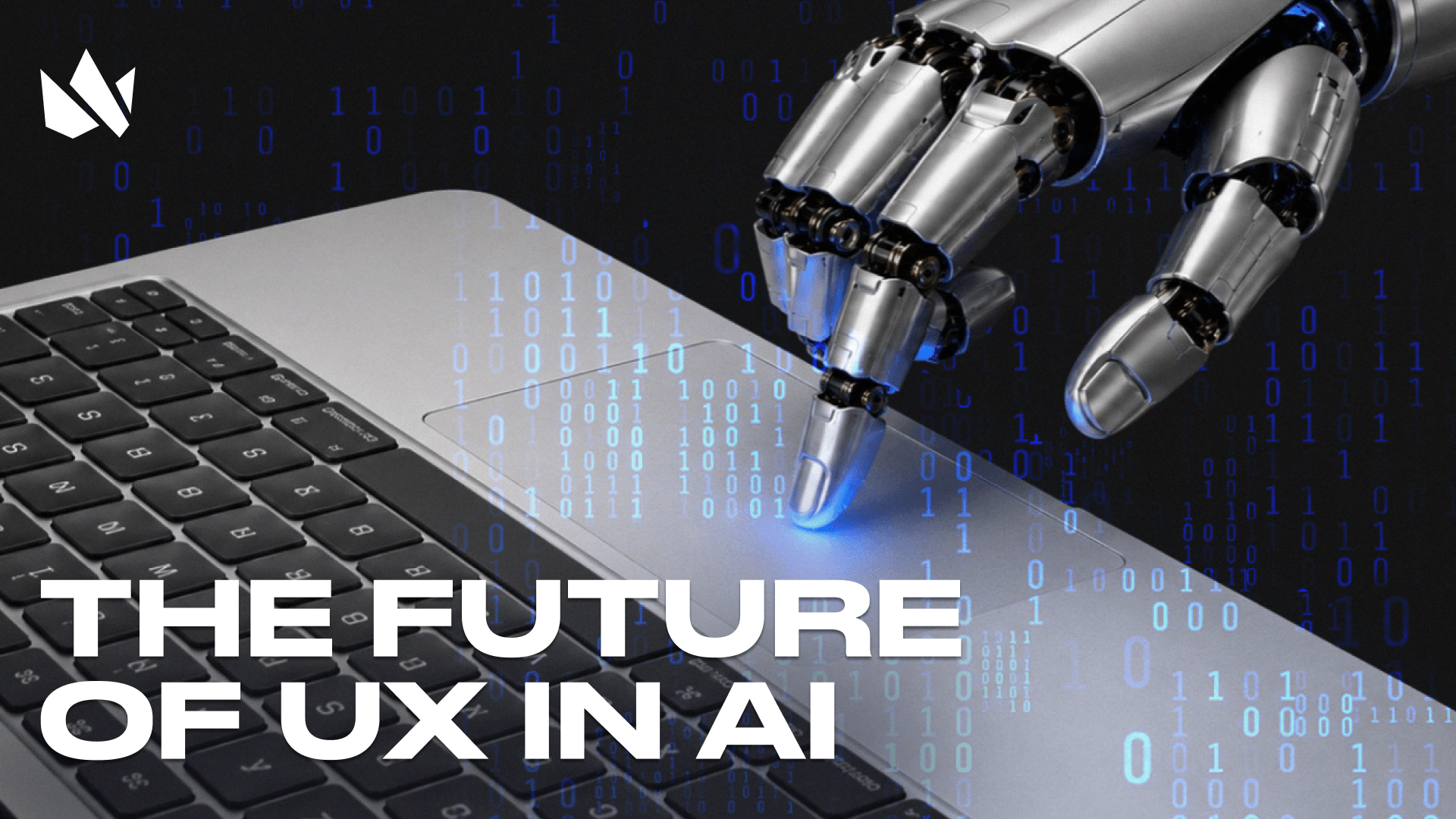
While preparing this material, we have studied some fresh insights about the future of user experience in the era of artificial intelligence. In particular, attention was drawn to the thoughts of Tom Squirrell, Chief Product Officer at Pretty Technical, who, in his article The Interface is Disappearing, raises a question that can change the entire digital product industry: what happens to UX when the interface ceases to be the main intermediary between humans and technology?
For decades, developers have been improving user interfaces in an effort to make interacting with games faster, easier, and more intuitive. However, the advent of generative AI is changing the very rules of the game. Today, we are on the threshold of an era in which the user interface may no longer be the centerpiece of the gaming experience.
Key Takeaways
- Intent is replacing navigation as the primary interaction model.
- AI-powered personalisation is redefining player experience.
- Invisible UX does not eliminate design — it transforms it.
- Trust, explainability and user control are becoming critical design principles.
- Future UX teams will focus on human–AI collaboration rather than interface optimisation.
- Gaming experiences will become increasingly adaptive, dynamic and individualised.
- The best interface may eventually be the one players never notice.
From interaction to intent
The history of UX is a story of reducing the distance between what users want and the results they achieve. Each technological generation has shortened this path: from command lines to graphical interfaces, from complex menus to mobile applications, and from manual settings to automated recommendation systems.
Artificial intelligence enables interaction through intent. Users no longer need to search for the right button, remember the location of functions or go through pre-designed scenarios. It is enough to formulate the task in natural language.
The user gradually ceases to be an interface operator and becomes a participant in dialogue with the intelligent system. The focus is on the goal. The desired result, not the choice of the team, is what matters.
Why is the traditional UI starting to disappear
Modern games are filled with a variety of interface elements, such as skill panels, maps, task logs, inventories, crafting systems and character settings. All of these are necessary for managing a complex system through visual tools.
However, if the system itself understands the context and makes decisions, many of these elements become redundant.
Imagine a new-generation MMORPG in which, instead of studying dozens of parameters, players can simply ask the system to prepare a character for a raid, choose the optimal equipment or explain why they recently lost. Artificial intelligence will provide recommendations based on the user's gaming style, history and current goals.
Personalisation as a new foundation for UX
Previously, personalisation in gaming was limited to content recommendations and settings. However, with the development of AI gaming, personalisation has become a key principle. Future games will adapt to each player in real time. AI will analyse preferences, the speed at which mechanics are mastered, the desire to research, the level of competitiveness and even emotional reactions to events.
Consequently, two people playing the same game may experience completely different narratives. UX designers must now teach AI to build this path for players independently.
Trust is the main currency of the future
The disappearance of interfaces presents us with new challenges.
Traditionally, the user experience was based on openness. Users could see what was happening inside the system and understand what actions the programme was performing, where the error occurred and what the next step would be.
However, artificial intelligence works differently. Its decisions often seem like a 'black box'. Users get the result, but are not always aware of how the system arrived at it.
This is particularly important in the gaming industry. If AI is managing complexity, selecting content, generating rewards or influencing the development of the plot, players need to be able to trust these decisions. Otherwise, even the most advanced technologies will be perceived as manipulation.
Users should be able to understand the logic of intelligent systems, see the rationale behind recommendations and feel that they are in control.
The new role of the UX designer
As interfaces become more invisible, the importance of UX design is increasing.
The designer now creates interactions between humans and AI. Key responsibilities include establishing system behaviour, fostering trust, providing feedback, and managing expectations.
UX designers of the future will work with the behaviour of digital entities and interfaces. This will require new skills at the intersection of psychology, linguistics, behavioural economics and machine learning. As products become smarter, it becomes increasingly important to understand how people make decisions and build trust.
So, what does the future hold for the industry?
We probably won't see interfaces disappear completely in the coming years. However, the direction of development is already clear. The number of screens will decrease, and the number of intelligent interactions will increase.
Games are gradually evolving from programs that need to be controlled into environments that understand humans. Complex navigation structures are being replaced by conversational interfaces. Instead of static scripts, dynamically generated content is used. Instead of a universal user path, there will be a personalised experience created in real time.
Perhaps in a few years, the question will no longer be 'How user-friendly is the game's interface?', but 'Did the player even notice the interface?'
If the answer is no, then the UX will have done its job perfectly.